Buying Bitcoin Gradually: How Dollar-Cost Averaging Works
4 Sept 2026 · 8 min read
Dollar-cost averaging removes the question nobody can answer — whether today is a good price. Here is how to set it up, what it really costs in fees, when it underperforms a lump sum, and how to decide in advance when to stop.
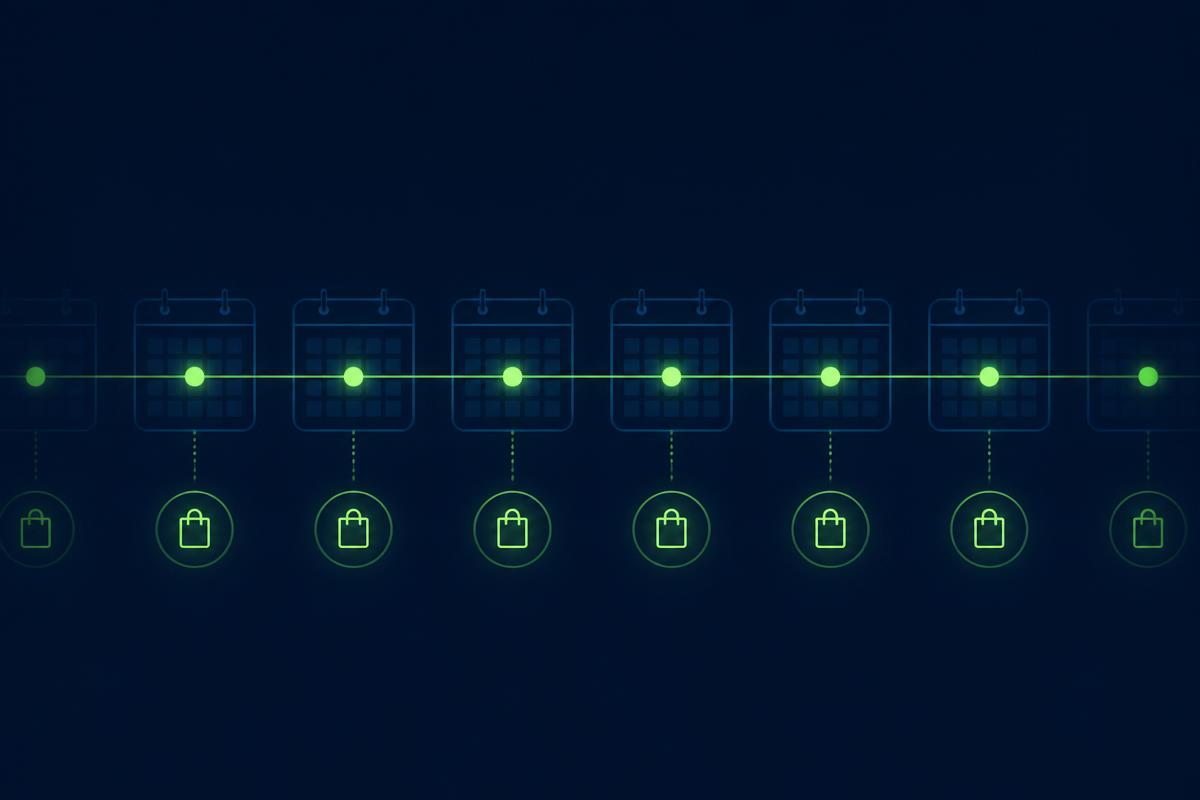
Dollar-cost averaging, or DCA, means buying a fixed amount of money's worth of an asset on a fixed schedule regardless of the price. Fifty each month, say, on the first Monday. When the price is low your money buys more; when it is high it buys less. The average price you pay ends up somewhere in the middle of the range you lived through.
The real benefit is behavioural rather than mathematical. Beginners lose far more money to timing decisions made under stress — buying after a rally because it feels safe, refusing to buy after a fall because it feels dangerous — than to paying slightly the wrong price. A schedule removes the decision entirely, which is exactly why it works.
Setting one up takes ten minutes. Choose an amount you would not miss if it vanished. Choose an interval that matches how you are paid, usually monthly; weekly is not meaningfully better and multiplies fees. Automate it on a platform you have already tested a withdrawal from. Then look at the chart no more than once a month.
Fees decide whether small purchases are worth it. On many beginner-friendly apps the simple buy screen charges a spread of one to two per cent on top of a visible fee, which means a twenty-unit purchase can lose several per cent before it starts. Compare the platform's advanced or exchange view, where costs are usually a fraction of that, and prefer fewer, larger purchases over many tiny ones if the fee is fixed.
Be honest about where DCA loses. In a market that mostly rises, investing everything at the start historically beats spreading it out, because your money spends more time invested. DCA is not a superior return strategy; it is a way of reducing regret and avoiding a single terrible entry. If you happen to have a lump sum, a reasonable compromise is to spread it over three to six months rather than three years.
There is also a failure mode worth naming. DCA into a coin that never recovers is just a slower way of losing money. The strategy protects you from bad timing, not from a bad asset. That is why most people who use it apply it to one or two large, liquid assets rather than to whatever is trending this month.
Decide the exit rules while you are calm. Write down how long you intend to keep buying, what would make you stop, and whether you will ever sell a portion into strength to rebalance. A one-paragraph plan, written before the first purchase, is worth more than any indicator during the week the price falls thirty per cent.
Finally, keep records from the very first buy: date, amount, price and fee. In most countries every sale or swap is a taxable event, and a two-year DCA history reconstructed from memory is a genuinely miserable afternoon.
Key takeaways
- DCA removes timing decisions, which is where beginners lose most money.
- Simple buy screens can cost several per cent — compare the advanced view.
- In rising markets a lump sum historically beats spreading purchases out.
- Write your stop and rebalance rules before the first purchase.
Disclaimer: This article is educational content, not financial advice. Crypto assets are highly volatile and you can lose everything you put in.
Related reading
How the Bitcoin Price Is Formed — and Why It Moves So Much
There is no committee setting the Bitcoin price. It is the last trade in a global order book — and once you can picture that book, the violent swings, the thin weekends and the liquidation cascades all start to make sense.
12 Sept 2026 · 9 min read

Bitcoin and Inflation: What the Evidence Actually Shows
Bitcoin is often sold as digital gold and protection against inflation. The scarcity argument is genuinely interesting; the track record is shorter and messier than the slogan suggests. Here is the honest version of both sides.
10 Sept 2026 · 8 min read

Bitcoin Explained for Beginners: How It Works and How to Buy Bitcoin Safely
A jargon-free walkthrough of how Bitcoin records ownership, why its supply is capped, what mining and halvings really change, how custody works, and the risks that catch newcomers out in their first year.
2 Sept 2026 · 11 min read